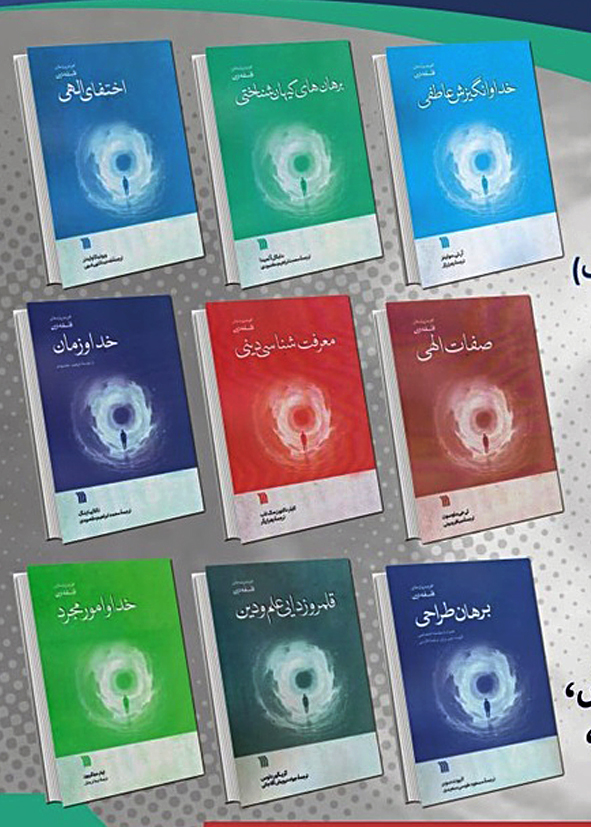
The nine-volume Cambridge Element of Philosophy of Religion offers a comprehensive and analytical exploration of topics in the philosophy of religion, published by Cambridge University Press. The translation of this collection has been supervised by Seyed Hassan Hosseini and a team of translators, including Zahra Zargar, Nima Nouri, Ibrahim Maqsoodi, Soha Fereydoni, Taher Abdullahi, Javed Darwishi, and Musaoud Tousi. It was published in 2024 by Sourosh Publications. Additionally, it is worth noting that 20 other volumes in the philosophy of religion series are currently in the process of publication under the supervision of Seyed Hassan Hosseini.
Free Will and Contemporary Scientific and Philosophical
The issue of free will is one of the difficult philosophical problems that has engaged various fields, including neuroscience, psychology, analytical philosophy, theology, and other areas. Human free will is incompatible with certain philosophical and scientific inquiries; however, we cannot separate it from our rational and practical existence. Our intuitive understanding of free will leads to a fundamental challenge against claims arising from a philosophical or scientific context, which this book aims to clarify. This book addresses the challenges facing free will within the scientific and philosophical landscape, particularly those that arise in contemporary discourse. It has been authored by Roozbeh Zare, Nima Narimani, Niloufar Shahinnia, Jamal Kadhkhapour, and is under the supervision of Seyed Hassan Hosseini, published in 2022 by Parsik Publications.
Theism and Darwinian Evolution
There is no doubt that Darwinian evolution and the theory of natural selection have transcended the boundaries of a biological theory and have stimulated numerous philosophical, theological, and religious perspectives. Among the various discussions that have emerged, theologians and atheists have particularly engaged with this theory, its assumptions, and implications. While atheists have predominantly benefited from Darwin’s theory of evolution over the past two centuries, theologians and theists have also presented diverse arguments to align the process of biological evolution with belief in God. Most of the articles in this collection are authored by writers who have extensively explored the relationship between Darwinian evolution and theology or atheism. Notable authors include John Haught, Michael Behe, Daniel Dennett, Michael Ruse, Michael Stenmark, William Lane Craig, John Hick, William Dembski, and Robin Collins. This book, supervised by Seyed Hassan Hosseini and translated by Mohammad Sadegh Mirzaei, Mehdi Bagheri, Narges Fathaliyan, and Roozbeh Zare, was published by Amirkabir Publications in 2018.
Mental health in Islam
The author states at the beginning of the introduction to this book: “This book is the result of my concern in the field of developing an Islamic psychological system and the outcome of research in this area approximately 20 years ago. At that time, the doubts and theoretical skepticism surrounding religious science, indigenous science, or Islamic science were not yet raised. I was also focused on the topic of Islamic psychology and mental health from the perspective of Islam in such an environment, and I have tried to explore Qur’anic and religious concepts to pave the way for the explanation of psychological concepts from an Islamic viewpoint. The author is aware of some criticisms and objections directed at this field, and over the years, both the author’s concerns and the prevailing literature in this area have changed. However, despite these issues, I have not seen any noteworthy research in this field that aligns with this book over the years”. This book was published by the Islamic Culture press in 2017.
The Uniqueness of Religion
In the twentieth century, Western philosophy of religion and contemporary theology exhibited an unprecedented inclination toward discussions known as religious pluralism. Religious pluralism gradually emerged as one of the important theories in Western philosophy, resulting in the growth of philosophical foundations that could nurture and cultivate the principles of these viewpoints. The present book examines two main axes: the religious pluralism discussed in the West, and the Islamic perspective on the unity and diversity of religions. A section of the book is dedicated to exploring, elucidating, and critiquing the Western viewpoint on religious pluralism, which is often referred to by the same name. The other part of the book is focused on the Islamic understanding of the true unity of religion. In the section concerning religious pluralism, efforts have been made to provide a comprehensive critique of the principles, results, and implications of this theory after elucidating its ideas. This book was published by Mehr Neyosha Publishing in 2014.
Media Studies (4 Volumes)
This collection is comprised of 4 volumes titled “Philosophy of Media,” “Sociology of Media,” “Religion and Media,” and “History and Media.” The significance of media studies is related to the sphere of production in the country, the necessity of revisiting successful media experiences, the implications of modern media, the need to present viewpoints based on local requirements, the gap in these studies within the country, and similar matters; these are among the objectives for compiling this four-volume set. Part of what is included in these volumes is derived from experiences in the field of media production. Accordingly, efforts have been made to select authors who not only possess academic expertise and research mastery but also have practical media experience. This book is supervised and written by Seyed Hassan Hosseini along with a group of contributors (including Vida Hamraz, Hassan Bashir, Mohammad Mahdi Labibi) and was published by the Research Institute for Humanities and Cultural Studies in 2013.
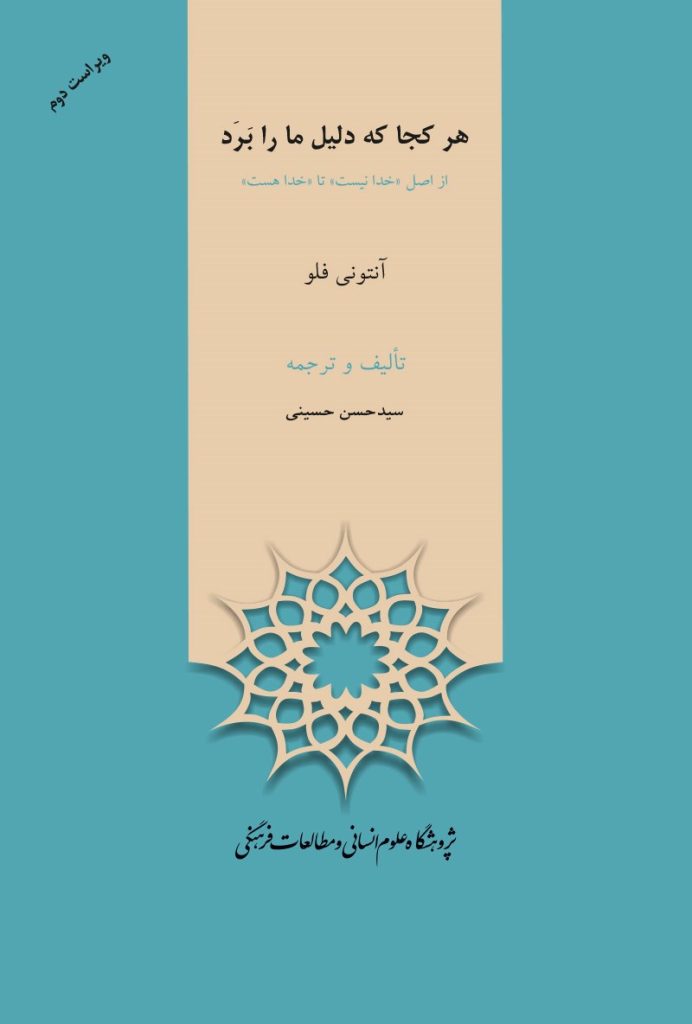
Follow The Evidence Wherever It Leads
Anthony Flew is a renowned British philosopher who spent over half a century advocating for atheism and denying the existence of God, leading to extensive philosophical debates. In 2004, he announced a change of his belief in God. In both his latest book, “There Is a God,” and in other writings and interviews, Flew emphasizes that his scientific method has always been to “follow the evidence wherever it leads.” The translation of the book “There Is a God,” subtitled “How the World’s Most Notorious Atheist Changed His Mind,” is valuable and engaging on its own. However, for those interested in these discussions, the first part of the present book, titled “There Is No God,” provides an exploration of Flew’s early intellectual life. This section aims to clarify the strength and weaknesses of the arguments and views from this phase of Flew’s philosophy, as well as to illustrate how his shift from atheism to theism was shaped by the refutation of the arguments he presented during his early career. The second part of the book, titled “There Is a God,” is a complete translation of Anthony Flew’s work. This book was published by the Research Institute for Humanities and Cultural Studies in 2011.
2003 _ 2010
Aesthetics and Media Philosophy
The book “Aesthetics and Philosophy of Media,” supervised by Seyed Hassan Hosseini, spans 644 pages and is the first Persian source on the philosophy of media in Iran. It consists of translations of significant articles in this field of study. As the title suggests, the collected articles in the book revolve around discussions of media aesthetics and media philosophy. The author states in the preface: “The indirect motivation for compiling this book relates to the main challenge of philosophical studies in contemporary Iran: how can philosophical studies be utilized and employed in the applied sciences? However, the direct and more apparent motivation for creating this work stems from the establishment of new disciplines in philosophical studies within the fields of modern media and communications in the country.” The only authored article in this collection, written by Seyed Hassan Hosseini, is titled “What is Media Philosophy?” and appears in the first chapter of the book. This book was published by Mehr Niyousha Publications in 2009.
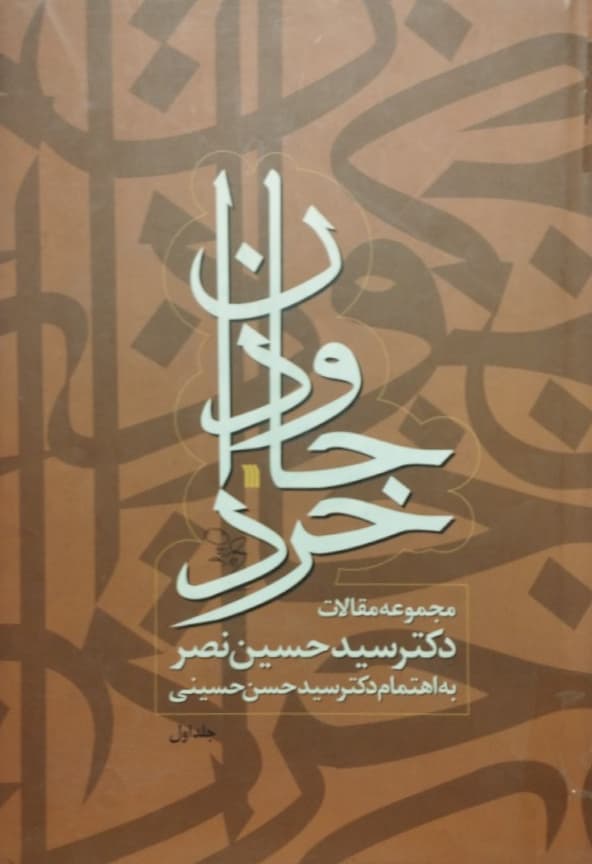
Perennial Knowledge (3 Volumes)
The three-volume collection Perennial Knowledge is a biography and papers by Seyed Hossein Nasr (Professor of Islamic Studies at George Washington University, USA). This three-volume book, edited by Seyed Hassan Hosseini, contains all of Dr. Nasr’s Persian articles. The chapter titles are as follows: – Volume One: Islamic Studies and Comparative Religions, Sufism, Mysticism, and Traditional Art, Islamic Philosophy and Philosophical Discussions, Scientific Topics and the History of Sciences, Great Thinkers of Islamic Thought, and Iran and Its Culture. – Volume Two: Examination of the Lives of Contemporary Scholars, Tradition, Modernity, and the Crisis of the Contemporary World, Philosophy, Sufism, and Art, Scientific Topics and the History of Sciences, Introduction and Critique of Various Books. – Volume Three: Contains the translated autobiography of Seyed Hossein Nasr. This collection was published by Mehr Neyosha Publications in 2007.
Philosophia Perennis: Collected Articles by Seyyed Hossein Nasr
This collection contains diverse articles by Seyed Hossein Nasr. It was edited by Seyed Hassan Hosseini and published by Soroush Publications in 2003.
Religious Pluralism or Pluralism in Religion
In this book, an effort has been made to analyse and evaluate the theory of religious pluralism prevalent in the West from the perspective of one of its defenders in the philosophy of religion, John Hick. The author believes that by utilizing the principles and foundations of Islamic teachings and philosophy, a new concept of “pluralism in religion” can be attained. In this new interpretation of pluralism, the true unity of religions is evaluated alongside the actual diversity of religions. Therefore, these two categories not only do not negate each other, but are also complementary. On this basis, the title of the book differentiates between the terms “religious pluralism” and “pluralism in religion.” This book has been published by Soroush Publications in three editions in 2003, 2013, and 2018.
Conference Books
The Measure of Wisdom
This book is a collection of articles from the National Conference on the Measure of Wisdom, compiled and edited by Seyed Hassan Hosseini and Qasem Pourhassan and published by Sourosh Press in 2003. This conference was held to commemorate the hundredth anniversary of Allameh Tabatabai’s birth. The purpose of the conference was to explore aspects of Tabatabai and to familiarize domestic and foreign researchers with the works of this philosopher. This collection includes selected articles and contains three discussions. Hosseini presented a paper titled “An Examination of the Foundations of Religious Pluralism with Respect to the Views of Allameh Tabatabai” which can be found in the articles section.
Pure Wisdom (3 Volumes)
This book is a three-volume collection of articles from the International Conference on Pure Wisdom (Hikmat-Motahar), published by the University of Radio and Television in 2007. The main focus of this conference was “Free Thought and the Revival of Religious Thought.” These volumes were prepared and published under the editorship of Seyed Hassan Hosseini.